A Future Postcard for an Ordinary Tuesday
A future postcard for an ordinary Tuesday makes regional change visible through one imagined scene, helping you picture what daily life could look like.
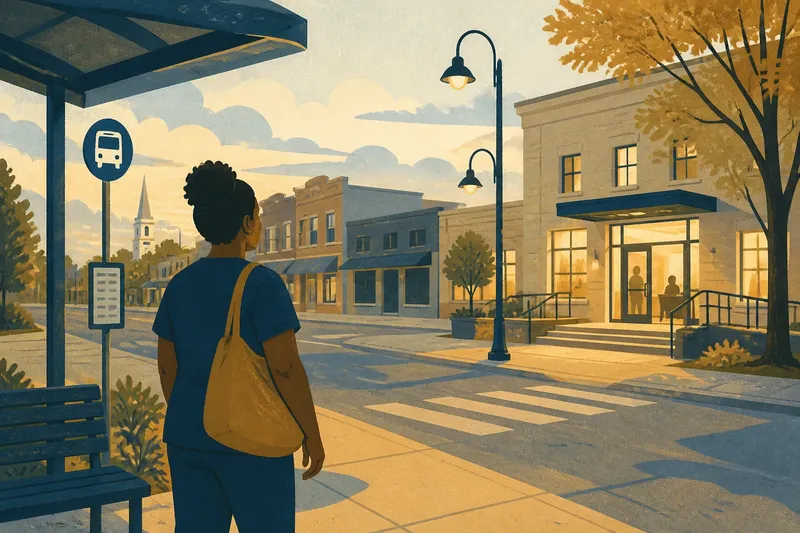
What would you want someone far from your Southern community to notice on an ordinary Tuesday? A future postcard for an ordinary Tuesday answers with a scene: the view from a bus window, a market opening onto a shaded sidewalk, or a family gathering in a public library after school. Rather than arguing for a broad promise, you make one possible future visible.
The exercise is not a forecast or a plan. It is a small act of civic imagination: arrange details in a picture, then ask what that picture leaves in or out. Its distinctive strength is visual composition. A written postcard can hold a foreground, a background, and a point of view in a way a list of priorities often cannot.
Postcard as a scene
Think of the postcard as a frame, not a report on an entire region. Choose a particular place you know or want to imagine—a rural crossroads, a coastal street, a county-seat square, or a block in a larger city. The scene belongs to that place; it does not need to stand for the South as a whole.
Decide what sits in the foreground. Perhaps it is a person waiting outside a clinic, a child crossing a schoolyard, or a shopkeeper setting out chairs. Then add a few background details that give the scene its character: a bus route sign, a storm drain, a church steeple, a line of pecan trees, or a river beyond the road.
These details are not decoration. Their placement directs attention. A new public bench in the foreground suggests one kind of change; a closed storefront left in the distance suggests another condition that remains. The postcard can show both without trying to explain every cause.
Frame the Tuesday
An ordinary weekday keeps the image close to routine. Choose a moment that could happen during a familiar day—before a shift, at school pickup, on an errand, or after a community meeting. Let the image show what the person can see and do, rather than relying on abstract words such as opportunity or resilience.
Use a few prompts to shape the frame:
- Foreground: If one person or object dominates the picture, then keep it central; if the scene feels impersonal, then bring a person into view.
- Route: If the person is going somewhere, then show a recognizable path or transition; if movement is not the point, then use a place where people pause.
- Visible change: If the change can be seen or used, then include it in the scene; if it exists only as a slogan, then replace it with an observable detail.
- Unfinished edge: If the scene looks too perfect, then leave one visible concern or limitation; if the difficulty overwhelms the image, then choose a smaller, more specific one.
- Point of view: If the scene assumes a car, free time, or easy access to services, then revise the viewpoint; if those conditions fit the chosen person, then make that choice clear.
- Background: If regional symbols crowd out the actual place, then remove them; if a local landmark helps orient the reader, then keep only the detail that belongs to the scene.
It is not worth adding magnolia trees, porches, or other familiar Southern imagery simply to make a scene seem regional. A specific bus stop or store entrance may tell the reader more about this place than a collection of symbols.
Compose with contrasts
A postcard can make change legible by placing two conditions in the same frame: a familiar obstacle beside a new possibility, or a public place that is useful to one person but still difficult to reach for another. The contrast should sharpen the image, not turn the scene into a before-and-after advertisement.
Say you are imagining a Tuesday on a fictional county-seat main street. The starting picture is a caregiver leaving a late shift, facing a dark walk from the bus stop to the pharmacy, with the library already closed. In the revised postcard, the same person steps off at a lit stop, follows a clear sidewalk past a staffed library entrance, and still sees a vacant storefront across the street. That sequence makes the imagined changes visible while keeping a remaining concern in view; it does not claim that the street’s wider problems have been solved.
When you write, stay within what the picture can show. “The library door is open as she passes” is an observable scene detail. “Every worker can now reach services” is a claim far beyond the frame. The distinction keeps an imaginative image from being mistaken for evidence or a settled civic proposal.
What should the image include?
How many details belong in a postcard?
Use a few details with clear roles: one focal person or object, a setting readers can recognize, and a change that affects the scene. If a detail does not help the reader picture the place or notice a condition, leave it out.
Can a postcard include a problem?
Yes. A visible limit can make the imagined future more honest, such as a route that still ends early or a public space that remains hard for some people to use. Keep the problem specific enough to belong in the frame rather than turning it into a broad verdict on the community.
Should the postcard be written or drawn?
Either form can work, and the two can be combined. A rough sketch with a short caption may make spatial relationships clearer, while a few sentences can show what the person notices; choose the form that best carries the scene.
How can a group compare postcards?
Place the images side by side and look for differences in framing: who appears, what sits in the background, and which changes are visible. Treat those differences as clues about what each writer chose to notice, not as a vote on whose picture is correct.
Read the frame carefully
After a postcard is shared, ask what the viewer sees first, what remains at the edge, and what the scene makes easy to imagine. A small group can use paper, colored pencils, sticky notes, or a shared digital canvas; the tool matters less than keeping each image intact long enough to inspect its choices.
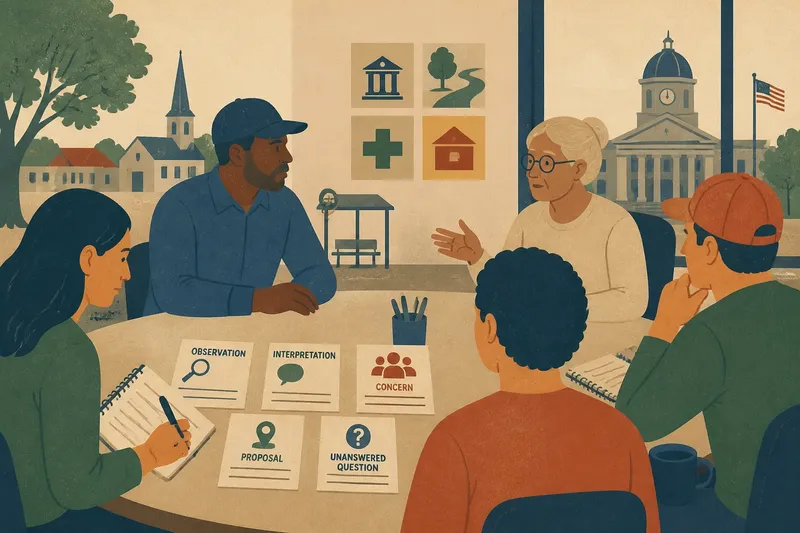
For each postcard, record three things separately:
- Visible detail: What can a viewer point to in the image or read in the caption?
- Implied value: What does the writer seem to care about, such as time, welcome, access, safety, or connection?
- Open question: What would need local knowledge or public discussion before anyone treated the scene as a possible course of action?
This is a way to read images closely, not a substitute for hearing from people whose lives the scene might describe. If a postcard becomes part of civic discussion, keep its author’s chosen point of view attached and make clear which details are imagined. Questions about services, land use, funding, or public programs call for additional local knowledge and appropriate public processes.
Keep the image open
A useful postcard remains a picture someone can examine, revise, or question. Preserve the original sketch or wording beside any notes about what viewers noticed. If later discussion changes the imagined scene, keep track of what moved in the frame and why; that visual record can show how assumptions shifted without pretending that one image speaks for everyone.
The search phrase future postcard for an ordinary Tuesday names a modest exercise, not a promise about what comes next. Its value lies in the particular view it offers—and in the edge of the frame, where the next useful question often waits.