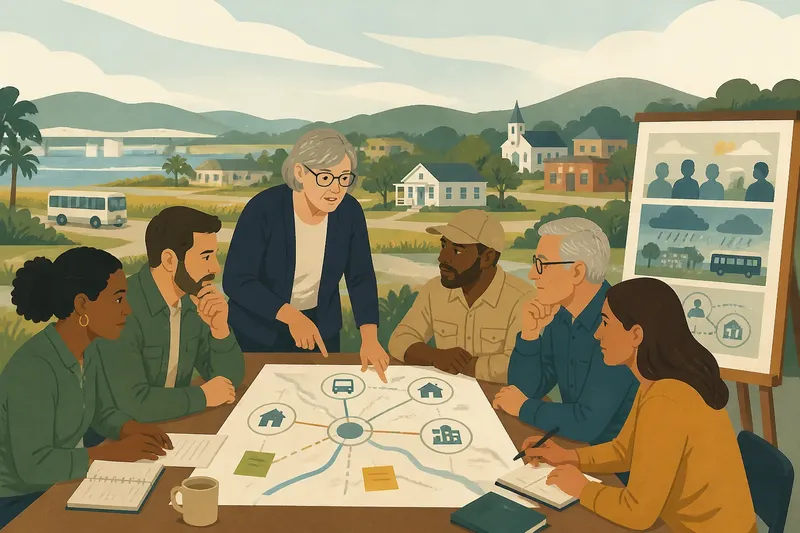
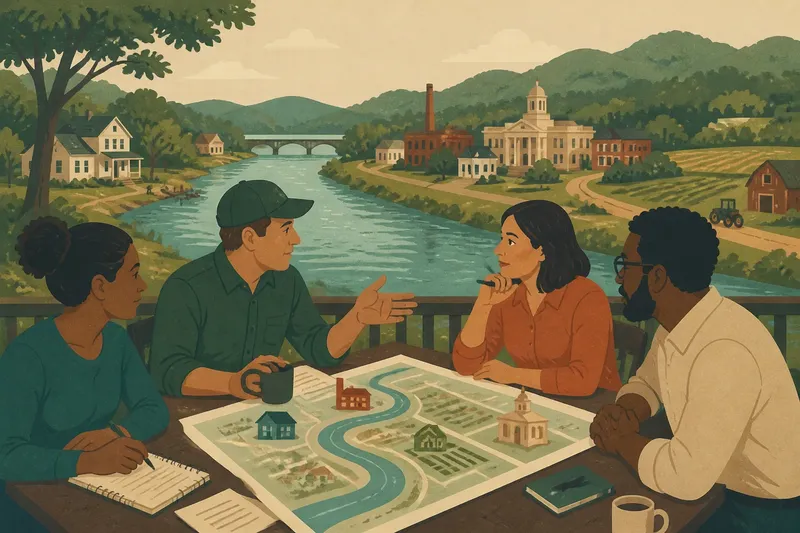
The Myth of the Clean Break: Change and Continuity Together
Regional change need not erase familiar life. See how communities can carry useful relationships, skills, and places forward while adapting what no longer works.
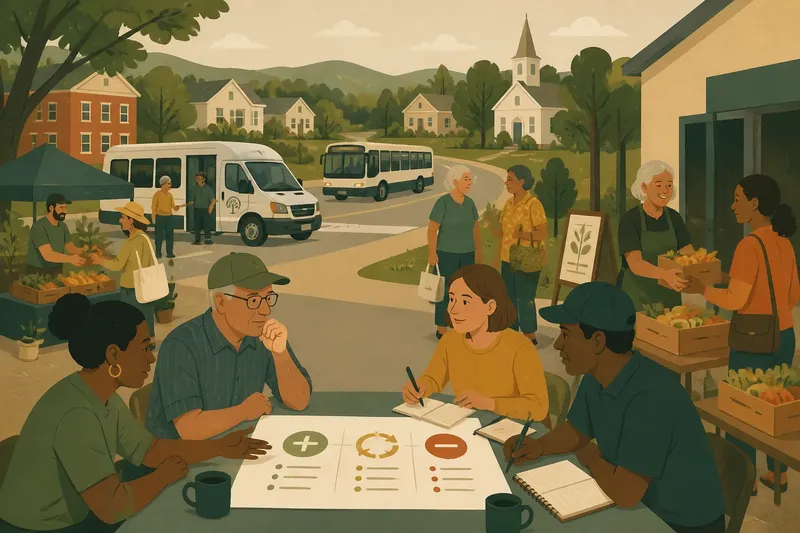
What does regional change ask a community to give up, and what can it carry forward? Across the South, the answer is rarely a clean break. A new service, a shifting local economy, or a changed use for a familiar place can coexist with older practices—if people distinguish the value of a practice from its current form.
Regional change in layers
A new bus route does not automatically make a church van unnecessary. A farmers market can grow alongside a roadside produce stand. The two options may serve different schedules, relationships, and needs.
For any proposed change, separate three questions: What is being added? What is being adapted? What is ending? Treating them as distinct makes it easier to see whether a new option complements an existing one or replaces it.
Continuity is not evidence that change has failed. Nor does a long-standing custom deserve to remain unchanged simply because it is familiar. The useful question is what people value in it, and whether that value can continue in a fairer or more workable form.
Trace what carries forward
Continuity may live in relationships, skills, places, or shared responsibilities rather than in an unchanged building or ceremony. A library that opens a room as a cooling space during hot weather can retain its role as a place to read, meet, and ask for help. The new use draws on trust built through the old ones.
Before replacing an arrangement, identify what it actually does. A volunteer ride network may provide transportation, but its regular callers may also notice when someone stops answering. A formal shuttle could address some travel needs while leaving room for personal check-ins. That observation is not an argument for preserving unpaid work; it helps planners account for what might otherwise disappear along with the old arrangement.
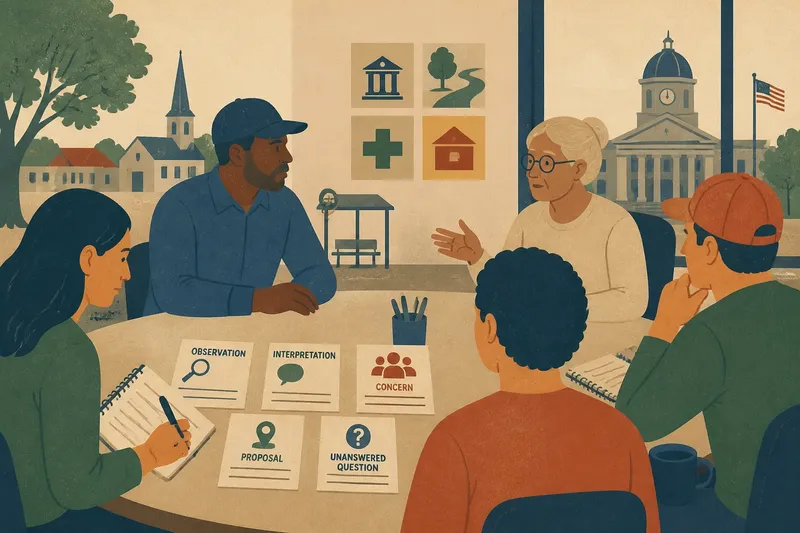
A simple record can make the distinction concrete. Note the practice, who sustains it, what need it meets, and what would be lost if its form changed. If the practice depends on a few people carrying an unfair burden, the record should say so too.
Test overlap before replacement
New practices often need room to take shape. A limited trial or a parallel option can reveal what fits before a community commits to one model. That is especially useful when people have different access to transportation, phones, public buildings, or reliable internet.
Say a small town’s seasonal food pantry uses a paper sign-up sheet at the library, and organizers are considering an online form. They could keep the paper sheet, add the form, and ask volunteers to note where each option causes confusion. If people use both routes, the town can decide to maintain both; if one route is inaccessible or difficult to manage, it can adjust that route before changing the whole system. The observable result is a clearer decision about access and administration, not proof that one method suits everyone.
Not worth the effort: inventing a polished slogan for every modest adjustment. People need a clear account of what is changing, who is responsible, and what remains open to decision—not a grand label for ordinary adaptation.
Keep value, change form
Some customs exclude people. Some services depend on exhausted volunteers. Some familiar routines no longer meet a need. In those cases, continuity should not become a reason to preserve the arrangement as it is.
Instead, ask what value the arrangement carries and whether another form can carry it better. A community might keep a tradition of neighbors sharing food while changing who organizes it, where it happens, or how newcomers can take part. The point is not to preserve every detail; it is to make a deliberate choice about what matters and who bears the work.
That choice can also correct an old imbalance. If the same residents have always done the organizing, a new arrangement can share responsibility more broadly. The relationship or shared purpose may continue even as the task moves to different hands.
Questions about continuity?
Does continuity slow regional change?
It can if familiarity becomes a veto against any adjustment. It can also help people see what they rely on, so a new arrangement does not discard useful knowledge or relationships by accident.
How can a community decide what to keep?
Identify who benefits from a practice, who sustains it, and what need it meets. Then ask whether that value can continue while access, responsibilities, or the practice itself changes.
When is replacement the better choice?
Replacement may make sense when an arrangement no longer serves people or imposes an unfair burden. Name what is ending, what need the new approach addresses, and which relationships or skills may need another way to continue.
Describe the actual change
Language can turn a practical decision into a false choice between past and future. “The old way is over” sounds like a verdict on an entire community. A more precise account might say that a service is moving, another option is being added, or a responsibility is being shared differently.
For a meeting note or public notice, check the proposed change against these questions:
- What is staying? If the answer names a valued practice that still serves people, explain how it will continue; if nothing is staying, describe what will replace its function.
- What is changing? If the change is limited to a location, schedule, or role, name that specific part; if it affects the whole arrangement, explain the broader shift.
- What is ending? If a service or responsibility is ending, name it plainly and identify the need that remains; if nothing is ending, avoid language that suggests a complete break.
- Who carries the work? If the same people remain responsible, decide whether that burden is workable; if not, identify who can take on or share the task.
- What remains undecided? If residents can still shape an option, name the decision and how they can contribute; if no part is open, state that clearly rather than implying otherwise.
- What knowledge might be lost? If a change could leave useful local skills or relationships behind, decide how to retain them; if not, explain why they are not needed in the new arrangement.
Imagine a library planning to move a weekly community meal from its reading room to a nearby church hall. The starting facts are that volunteers cook at the library, the hall has an available kitchen, and the move is under consideration rather than approved. First, organizers list what stays: the meal and its volunteer cooks. Next, they name what changes: the location and kitchen. Then they check who handles transport and setup; if the same volunteers cannot manage those tasks, they ask the hall’s existing users whether responsibilities can be shared. Finally, they mark the move as undecided until those arrangements are clear. The result is a specific choice—proceed only if transport and setup have willing support, or keep the meal at the library for now—rather than a vague debate over whether the community is abandoning its traditions.
Regional change does not have to resemble erasure to be real. Look for what has been added, what has been reshaped, and what people still rely on; regional change becomes easier to judge when those distinctions are visible. A community can then choose what to carry forward without asking the past to stay fixed or the future to arrive all at once.